Filmed April 2017 – edited into 6 parts; total 111 minutes
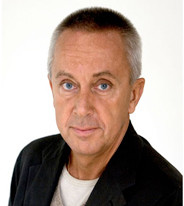
Christopher Gillberg, MD, PhD,
Professor of Child and Adolescent Psychiatry, University of Gothenburg, Sweden
Director, Gillberg Neuropsychiatry Centre, University of Gothenburg
Presentation Description
Professor Gillberg is a world renowned autism researcher who has developed the concept of ESSENCE (Early Symptomatic Syndromes Eliciting Neurodevelopmental Clinical Examinations), recognizing the overlapping symptoms of ASD, ADHD, Oppositional Defiant Disorder/Conduct Disorder (ODD/CD), anorexia nervosa and other eating disorders, intellectual developmental disorder, communication disorders, dyslexia, epilepsy, cerebral palsy and others.
In this thought provoking presentation, Dr. Gillberg makes the case that while these are common childhood onset disorders affecting about 10% of the general population, with early recognition, psychoeducation and other targeted interventions, adaptive outcomes in adult life can be improved.
This presentation was recorded in 2017 at ACT’s 13th Annual Focus on Research Conference, held at Simon Fraser University in Vancouver, British Columbia. ACT appreciates Dr. Gillberg’s generosity in allowing us to include it in Autism Videos @ ACT.
Recognize symptoms of ESSENCE/neurodevelopmental disorders at all ages and refer for appropriate assessment.
Understand the basic mechanisms underlying ASD and ADHD.
Analyze how “primary” ESSENCE lead on to “secondary” outcomes including psychiatric disorder, substance use disorder, criminality and physical ill-health.
Christopher Gillberg, MD, PhD
Dr. Christopher Gillberg is Professor of Child and Adolescent Psychiatry at the University of Gothenburg, Sweden where he heads the Gillberg Neuropsychiatry Centre. He is also Visiting or Honorary Professor at the Universities of London, University College London (Institute of Child Health), University of Glasgow, University of Edinburgh, and Kochi University, Japan (where he is involved with the Japan Environment Cohort Study/JECS). Christopher Gillberg is considered the most productive autism researcher in the world, and is on Thomson Reuters 2014 list of the world´s most influential researchers (all fields) because of the number of citations of the many peer-reviewed scientific papers he has published (600) relevant to children´s and adolescents’ mental and neurological health. His research interests included ASD, ADHD, Tourette syndrome, intellectual disability, epilepsy, behavioural phenotype syndromes, depression, reactive attachment disorder and anorexia nervosa. His research ranges from genetics and basic neuroscience through epidemiology and clinical phenomenology to treatments/interventions and outcome. He has written 31 books, which have been published in more than a dozen languages, several of which are standard textbooks in the field of Child and Adolescent Psychiatry and Autism. He is an honorary member of the Swedish National Autism Society and ADHD Society (“Attention”), and a member of the Norwegian Academy of Sciences.
Visit Dr. Gillberg’s blog. Christopher Gillberg and his team of experts offer their opinions each week on the latest happenings in the world of neuropsychiatry and mental health (ESSENCE).
Questions asked (with time question is asked noted):
How would you bring ESSENCE to smaller communities where there aren’t the services and resources? (Start of video)
Is it possible to delay a diagnosis of autism and put the children under the ESSENCE umbrella?(04:02)
What assessment or treatment would you recommend for a child, 7 to 8, with Autism who is receiving early intervention and has not yet been diagnosed with another disorder yet is starting to present some anxiety and has an aggressive family history of mental illness? (13:50)
What kind of training do professionals need to identify ESSENCE disorders? (16:35)
With regards to early assessment, what is the TTF? (25:18) View screening questionnaires from Gillberg Neuropsychiatry Centre
Could you comment on early diagnosis of ASD? (28:54)
Presented by Professor Anthony Bailey, Chair of Child and Adolescent Psychiatry, UBC
In this video, Professor Bailey, Chair of Child and Adolescent Psychiatry at UBC, provides an insightful overview of the epidemiology of ASD in Canada. After discussing the methodology used to develop the National ASD Surveillance System report, Dr. Bailey presents a summary of the findings and compares Canada’s rate of ASD among children and youth, to the situation internationally.
The Public Health Agency of Canada’s National Autism Spectrum Disorder (ASD) Surveillance System (NASS) is a federally funded initiative to estimate and monitor the number of individuals with ASD. The initial phase of the program estimates this number among children and youth. The findings of the 2015 NASS report focuses on those aged 5–17 years, from six provinces and one territory: Newfoundland and Labrador, Nova Scotia, Prince Edward Island, New Brunswick, Quebec, British Columbia and the Yukon.
Part 1: Background information on ASD Surveillance
Part 2: ASD Among Children and Youth in Canada 2018 – a Report of the National ASD Surveillance System
Click image to view the NASS report
Summary of findings
Among children and youth 5–17 years old across seven provinces and territory, the combined prevalence of ASD for the year 2015 is 1 in 66 (15.2 per 1,000).
Males were diagnosed with ASD four times more frequently than females. NASS found that 1 in 42 males (23.9 per 1,000) and 1 in 165 females (6.0 per 1,000) aged 5–17 years old were diagnosed with ASD.
Retrospective data from 2003–2015 from Newfoundland and Labrador, Prince Edward Island, and Quebec showed that, among 5–14 year olds, ASD prevalence has increased from 6.0 per 1,000 to 19.6 per 1,000 in Newfoundland and Labrador; from 5.0 per 1,000 to 17.7 per 1,000 in Prince Edward Island; and, from 3.5 per 1,000 to 15.7 per 1,000 in Quebec.
In comparison to the Autism and Developmental Disabilities Monitoring (ADDM) Network from the United States’ Centers for Disease Control and Prevention (CDC), which looks only at 8 year olds, NASS’ prevalence was 1 in 63(8 year olds) in the year 2015 versus the ADDM Network’s prevalence of 1 in 68 in the year 2012.
As professionals working in culturally diverse communities in Metro Vancouver, it is important to consider how we can best deliver culturally-sensitive services to the many families for whom English is not their first language. In an effort to address the need for culturally responsive services, a group of Metro Vancouver professionals have created a workgroup within the International Dissemination committee of the Association for Positive Behavior Support. Over the past year, the group has been working to develop a series of parent training workshops. The goal is to improve the quality of lives for families and their children by empowering families to use PBS strategies in their daily lives in ways that are effective as well as meaningful and acceptable culturally. This presentation will describe a summary of the workgroup’s progress to date and next steps.
Parbs Bains, M.Ed., BCBA
Parbs Bains has 14 years of experience supporting the needs of children with autism and other developmental disabilities in the public school system and in private practice. Parbs is a Board Certified Behavior Analyst and holds a Master of Education in Special Education from the University of British Columbia.
Noreen Dunn, M.Ed., BCBA
Noreen Dunn has been supporting children with Autism Spectrum Disorder and other developmental in home, school, and community settings for the past 11 years. Noreen is a Board Certified Behavior Analyst and holds a Master of Education in Special Education from the University of British Columbia.
Part 1: The Need for Multi-Lingual & Culturally Responsive Service Providers
Part 2: Common Barriers for Culturally Diverse Families
Part 3: Culturally Sensitive Considerations and Supports
Reference: Chen, D., Downing, J. E., & Peckham-Hardin, K. D. (2002). Positive behavior support with families of diverse cultural and linguistic backgrounds: Considerations for culturally responsive practices. In J. M. Lucyshyn, G. Dunlap, & R. W. Albin (Eds.), Families positive behavior support: Addressing problem behavior in family context (pp. 131- 151). Baltimore, MD: Paul H. Brookes. Singh, N. N., Lancioni, G. E., Winton, A. S. W., Karazsia
Part 4: Positive Behavioural Support Workgroup
Part 5: Pilot Workshop Plan & Outline
Part 6: Workshop Structure: Mindfulness-Based PBS & Behaviour Skills Training
Reference: Singh, N. N., Lancioni, G. E., Winton, A. S. W., Karazsia, B. T., Myers, R. E., Lathan, L. L., & Singh, J. (2014). Mindfulness-Based Positive Behavior Support (MBPBS) for Mothers of Adolescents with Autism Spectrum Disorder: Effects on Adolescents’ Behavior and Parental Stress. Mindfulness, 5, 646-657.
Drs. Iarocci and Gardiner present findings from a mixed-methods study with caregivers of individuals with ASD in British Columbia. Participants reported on their satisfaction with available funds and resources. This research revealed important insights into the strengths and challenges associated with the BC funding model, as perceived by service users. The conclusions are, however, limited by the lack of diversity represented within the sample. It is critical that methods of engaging families who live outside of major centres, and who represent diverse ethnic and cultural backgrounds are developed. Such approaches acknowledge the rich diversity represented within the province, and ensure that evidence-based recommendations have value for all families of children with ASD. The video concludes with a discussion on the implications for provincial policy and practice, and present strategies for including under-served families in research.
Grace Iarocci, PhD., R. Psych. is a Professor of Psychology at Simon Fraser University, and Director of the Autism and Developmental Disorders Lab. She is a Michael Smith Foundation for Health Research Scholar, and an Autism Research Training Program mentor.
Emily Gardiner, PhD, BCCH
Emily Gardiner, PhD is a postdoctoral fellow with the Department of Pediatrics at the University of British Columbia. She is conducting her current research out of the Child and Family Research Institute within The M.I.N.D. Research Theme.
Part 1: Introduction and Literature Review
Part 2: ASD and Service Delivery
Part 3: Survey and Interview Results
Part 4: Research Discussion and Policy Implications
Part 5: Study Limitations and Hard-to-Reach Populations
Many bilingual families are told by professionals to speak only one language (in Canada, either English or French) to their child with autism spectrum disorder (ASD). The rationale for this recommendation is that the linguistic input to which these children are exposed should be as simplistic as possible in order to facilitate language learning, given the social-communicative challenges inherent in ASD. Until recently, few studies had compared language development in monolingual vs. bilingual children with ASD to determine if exposure to more than one language is, in fact, problematic. This presentation will summarize the research in this area, much of which was conducted in Canada, with recommendations for bilingual parents and for professionals who support them.
Presenter: Pat Mirenda, PhD, BCBA
Pat Mirenda is a Professor and Director of the Centre for Interdisciplinary Research and Collaboration in Autism at the University of British Columbia. She has published numerous research articles and presents frequently at international and national conferences. Her research examines the developmental trajectories of children with autism and their families.
Part 1: Introduction and Parents’ Experiences
Jegatheesan, B., (2011) Multilingual Development in Children with Autism: Perspectives of South Asian Muslim Immigrant Parents on Raising a Child with a Communicative Disorder in Multilingual Contexts
Fernandez y Garcia, E., Breslau, J., Hansen, R., & Miller, E., (2012) Unintended consequences: An ethnographic narrative case series exploring language recommendations for bilingual families of children with autistic spectrum disorders
The empowerment of caregivers is increasingly recognized as a critical component of intervention for children with autism. The World Health Organization recommends parent skills training (PST) for management of developmental disorders. However, to date, no such programs have been widely available, especially for use in low-resource communities. Our team is currently undertaking a local adaptation and evaluation of this new evidence-based, affordable, PST program that can be delivered by non-specialist providers in a wide range of community settings. We also interlink our local evaluation with field trials in low- and middle-income countries, in support of global research in intervention design and delivery.
Presented by: Mayada Elsabbagh, PhD, McGill University
Mayada Elsabbagh, Ph.D. is Assistant Professor in Psychiatry at McGill University. Her research focuses on understanding the root causes of autism and tracing its developmental pathways. The approach integrates innovative research with the mission of accelerating translation of scientific discoveries into community impact. Mayada’s recent contributions include the identification of very early brain function markers for autism prior to the onset of behavioral symptoms. She also supported the successful launch of collaborative research and translational networks, aimed at accelerating the pace of discovery in early autism. She has contributed to mapping knowledge translation priorities in under-resourced communities. In 2010, she was awarded the Neville Butler Memorial Prize, in recognition of the public value and social relevance of her research. In 2013, she was the recipient of the British Psychological Society Neil O’Conner Prize, awarded for her work in early autism biomarkers.
In this lecture, based on research in South Korea, India, South Africa, and among Korean-American and African-American communities in the United States, anthropologist Roy R. Grinker addresses three questions relevant to research on Autism Spectrum Disorder:
1) What does it mean to say that a phenomenon is “cultural?”
2) What are the cross-cultural commonalities and differences in how autism is defined and treated?
3) What kinds of cross-cultural research can have an impact on early detection and intervention?
He will also discuss science as a cultural formation that promotes and constrains scientific and popular definitions of ASD, epidemiological research on ASD, and the social movement to refigure autism as ability instead of disability.
Dr. Roy Richard Grinker, Professor of Anthropology, International Affairs, and Human Sciences at George Washington University. Author of Unstrange Minds –Remapping the World of Autism.
Strategies for attaining recognition:
1. Go to other service providers
2. Find counter-authority (SLPs for example)
3. Counter powerlessness with power (resistance)
Part 2.4: South Korea – Some Examples
Part 2.5: Neurodiversity
Part 2.6: Q&A
Q: Fetal Alcohol Syndrome
Q: How do we get past the barrier of autism as stigmatizing?
Q: don’t you have to believe that the system will help to accept a diagnosis?
Q: What is approach of families with children with significant challenges, where diagnosis cannot be denied?
Q: How can we go back to our own communities to expose challenges and assumptions to help our own communities
Q: Will trajectory of autism continue to increase?
Q: In countries where services available, are children over-diagnosed in order to receive services?
Filmed in 2009 – edited into 4 parts; total 239 minutes
Why Focus on Transition to Adulthood? Although the emphasis on transition from high school to work officially begins in Grade 10 and continues until graduation, in reality, the process should begin much earlier for students with ASD. Attitudes toward work combined with decisions we make for students can significantly influence the path they may choose to follow. This video defines the roles and responsibilities for individuals supporting students as they mature with Autism Spectrum Disorder, including parents, and provides participants with information and strategies which help promote meaningful participation for students with ASD in the work world. The importance of developing and maintaining career portfolios is also explored.
About the Presenter
Vicki Lundine is a District Career Facilitator for the Campbell River School District on Vancouver Island. She taught for 20 years and has spent the last 10 years as a career counselor. Her passion and enthusiasm for finding great placements for her students is infectious! Catherine Smith is an Educational and Behavioral Consultant for the Provincial Outreach Program for Autism and Related Disorders. As a Learning Assistance Teacher, District Integration Support Teacher and Provincial Consultant, she has worked collaboratively with parents and professionals to support students with ASD for over 20 years. Vicki Lundine and Catherine Smith are the authors of Career Training and Personal Planning for Students with Autism Spectrum Disorders – A Practical Resource for Schools. Published by Jessica Kingsley Press in 2006, this book provides important information for parents and school professionals.
Filmed October 2015 – edited into 20 parts; total 202 minutes
In this video, Dr. Weiss looks at how to promote positive outcomes in youth with ASD, including those with Intellectual Disability, by focusing on indicators such as happiness, satisfaction and resilience. This presentation has significant implications for educators, families and therapists as they look at the pivotal interventions that will have the biggest impacts on youth with ASD as they prepare and enter into adult life, specifically, interventions that target social-communication difficulties and promote social interaction and community inclusion for youth with ASD.
This video includes a panel presentation with Dr. Anthony Bailey, UBC; Patrick Dwyer, student and self-advocate; Dr. Stephanie Jull, Canucks Autism Network; Dr. Rashmeen Nirmal, Sunny Hill Health Centre and Dr. David Worling, Westcoast Child Development Group.
Part 1: Introduction (4:06)
Weiss, J.A., Whelan, M., McMorris, C., Carroll, C. and the Canadian Autism Spectrum Disorder Alliance (2014) Autism in Canada: National Needs Assessment Survey for Families, Individuals with Autism Spectrum Disorder and Professionals
Part 2: Mental Health Rates in Autism (17:58)
Facing your Fears (Reaven, et al., 2011). Paul Brookes.
Child anxiety disorders: a family based treatment manual for practitioners (Wood, et al., 2008). WW Norton & Co.