
Tag Archives: Emotional Regulation

🎃 Hallowe’en Tips for Autistic Children and Youth


Hallowe’en can be fun and meaningful in many different ways. These strategies can help ensure autistic children and youth feel safe, comfortable, and included — whether they go trick-or-treating, hand out treats, or celebrate at home.

1. Prepare and Plan Ahead

  • Talk through what to expect. Use pictures, videos, or social stories to introduce trick-or-treating, decorations, costumes, and potential noises.
  • Visit familiar locations. Choose neighbourhoods or homes your child already knows.
  • Preview the route. Walk or drive the trick-or-treat path a few days beforehand to ease anxiety.

2. Choose Comfortable Costumes

  • Prioritize comfort. Soft fabrics, tag-free shirts, or wearing favourite clothes under a costume can help.
  • Avoid sensory triggers. Skip masks, makeup, or scratchy materials if they cause discomfort.
  • Try simple or DIY options. Create costumes inspired by your child’s interests — e.g., dinosaur pyjamas or a favourite superhero T-shirt.

3. Support Sensory Needs

  • Bring noise-cancelling headphones or ear defenders for loud or unpredictable sounds.
  • Use familiar or dim lighting at home if flashing lights or bright decorations are overwhelming.
  • Carry comfort items, such as fidgets or a preferred toy, to support regulation.

4. Offer Choices and Flexibility

  • Let your child choose how to participate — handing out treats, trick-or-treating, or simply looking at decorations.
  • Take breaks as needed. It is okay to skip homes or head back early.
  • Plan alternatives. A movie night, pumpkin decorating, or a small family celebration can be just as enjoyable.

5. Support Communication

  • Use communication cards or badges (e.g., “I’m nonspeaking” or “Happy Hallowe’en!”) to help others understand.
  • Practice simple phrases — such as “Trick or treat!” or “Thank you!” — or decide together that speaking isn’t necessary.
  • Follow your child’s lead. Observing or participating in their own unique way is perfectly valid.

6. Create a Calm Candy-Sorting Routine

  • Provide a quiet space to sort candy after trick-or-treating.
  • Respect food preferences and allergies — swap candies for safe treats, stickers, or small toys if needed.
  • Use sorting as a learning opportunity — counting, organizing, and making choices.

7. Encourage Inclusive Communities

  • Share simple awareness messages to help neighbours understand how to be autism-friendly on Hallowe’en.
  • Encourage the use of a blue pumpkin or “autism-friendly” sign to indicate a calm, welcoming environment.
  • Thank neighbours who show understanding and support — it helps build inclusive neighbourhoods.

🧡 Key Message

Hallowe’en doesn’t have to look the same for every child.
What matters most is that your child feels safe, comfortable, and included — in whatever way they choose to celebrate.

🧡 ACT – Autism Community Training
www.actcommunity.ca

AutismAcceptance #Neurodiversity #InclusiveHalloween
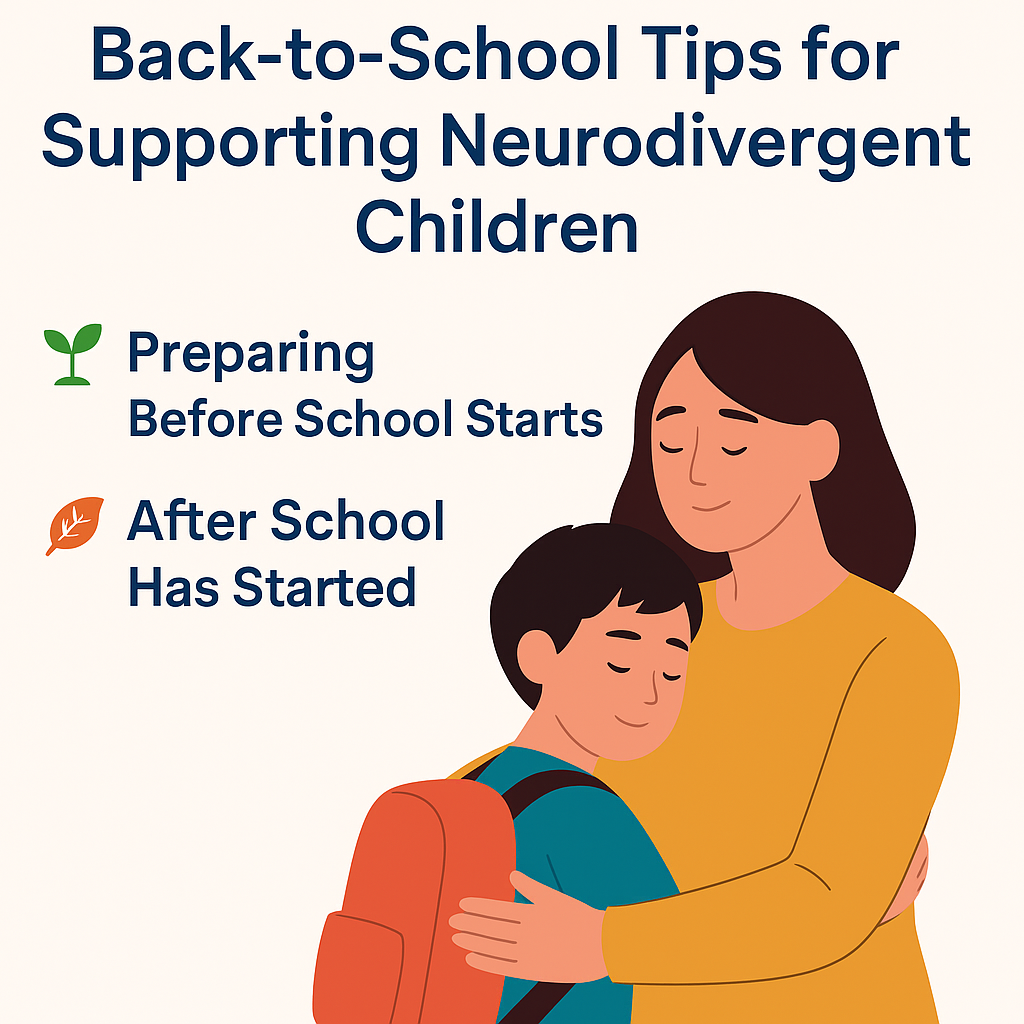
Back-to-School Tips for Supporting Neurodivergent Children: Preparing and Adjusting


The start of a new school year can bring excitement as well as stress—especially for neurodivergent children and their families. While September is already underway, these tips remain a valuable reference for easing transitions, building predictability, and supporting children both before school begins and after routines are in place.

🌱 Preparing Before School Starts

When possible, helping children become familiar with the school environment and routines before the first day can make the transition smoother:

  • Familiarization with the Environment
    Take photos of key places (such as the school building, classroom, gym, washrooms, office, and playground) and create a simple photo booklet or slideshow. If the classroom is already known, schedule a walkthrough and spend some time exploring the playground.
  • Predictability & Routine
    Ask for a class schedule and turn it into a visual chart with icons. Practice transitions at home (like lining up or moving to another space) and rehearse the morning routine of waking up, getting dressed, and packing a bag.
  • Sensory Considerations
    Identify potential challenges (noise, lighting, smells, busy areas) and prepare supports such as noise-cancelling headphones, fidgets, or sunglasses. Point out a quiet or safe space for breaks.
  • Social Connection
    Frame unknowns (like not yet knowing the teacher) as surprises you’ll discover together. Arrange a playdate or meet-up with a peer if possible.
  • Tools for Comfort
    Create a social story (e.g., “This is my school. My classroom looks like this.”) and a checklist for daily items like lunch, water, or homework.
  • Communication with Staff
    Once staff are known, share a one-page profile highlighting your child’s strengths, sensory needs, and helpful strategies.

🍂 After School Has Started

Even after children are back in the classroom, ongoing adjustments at home and in communication with teachers help ensure smoother transitions:

  • Revisit and Adjust Routines
    Simplify mornings and evenings with small steps like laying out clothes the night before or using checklists. Consistency matters more than perfection.
  • Strengthen Home–School Communication
    Schedule short check-ins with teachers and problem-solve together: “What strategies are helping with transitions?”
  • Create Calm After School
    Allow downtime before starting homework or activities. Offer choices for regulation, such as quiet time, movement, or favourite interests.
  • Support Emotional Regulation
    Keep calming tools available (weighted blanket, sensory bin, headphones). Validate your child’s feelings with phrases like, “It sounds like today was really loud and tiring.”
  • Monitor Energy and Stress Levels
    Watch for signs of “after-school restraint collapse” and normalize meltdowns as a sign of effort. Consider reducing extracurricular activities until routines stabilize.
  • Focus on Strengths and Successes
    Celebrate small wins, such as completing the school day or trying a new subject. Share these successes with teachers to reinforce confidence and teamwork.

🌟 A Lasting Resource

While the school year may already be underway, these strategies remain helpful at any stage of the transition. Families can return to them throughout the year to revisit routines, strengthen communication, and nurture resilience.

👉 For more resources and family-friendly strategies, visit our ACT News section.